Quick Note | Bloom Energy: Questions for the upcoming Q2-2026 earnings
Peak doomsters vs human ingenuity?

“… increased scarcity causes the development of its own remedy. This has been the key process in the supply of natural resources throughout history.”
— Julian Simon | The Ultimate Resource 2
This post is later than I would have liked due to ongoing health issues (see my earlier note on Substack/X), but better late than never I suppose.
It’s safe to say this earnings call will take the cake for being the most scrutinized ever, given all the hoopla over Scandium and Bloom’s handling of the issue so far.
If my ninth-grade Geography teacher was to be believed, we would have been in a world of trouble when it came to oil long before now. But the reality is that not only did world consumption and production keep growing (in fits and starts), but the US even overcame “peak oil” and is the world’s largest oil producer now. One wonders how many outside the fracking community would have predicted that. And come to realize that it’s not so simple to predict resource production and prices in the short run. A deeper understanding of the economics matters.
I’ve pointed out Bloom’s use of Scandium as something to keep an eye on since the very second Substack post I made. However, I’ve also been sanguine about it being a solvable problem. More on that later, but it’s going to be fun listening to all the questions and Bloom’s management trying to handle the situation.
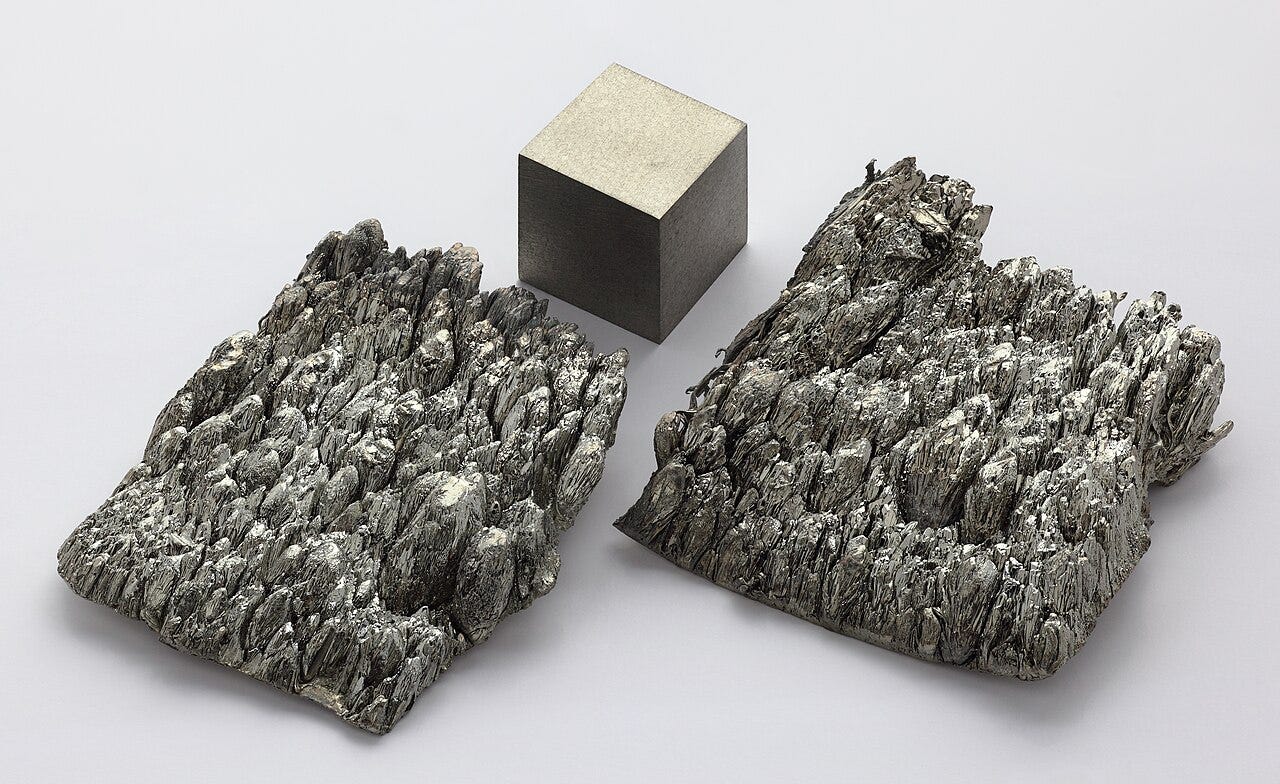
How will Bloom handle the newfound Scandium bogeyman?
More than the actual substance of whatever Bloom presents to convince the skeptics, I’ll be interested in the approach Bloom takes to handle the issue on the call. Are they going to be more transparent and open about the work they have done over a decade w.r.t. Scandium oxide? Will supply chain experts like COO Satish Chitoori be made available to answer questions? Will they talk about folks like Jim Cook (now Senior Advisor) who had a 25-year career in Rio Tinto Iron & Titanium (ending as CEO) and has been at Bloom since at least 2011 with a PhD in Metallurgy. Gee, one wonders what he was doing at Bloom?
Is Bloom going to realize it’s no longer a small scrappy startup that went public but instead might be a potential S&P 500 level company? Perhaps some change in tactics is warranted?
Is Bloom considering LTA type agreements with potential large customers?
Every day we come across jaw dropping AI infra cap-ex numbers from the big players, either directly or funding each other via what skeptics call “circular financing”. Forget the money involved. Where is the power going to come from given our groaning grid and not yet fully expanded behind-the-meter power capacity? Is Bloom talking to any potential large customers with LTA type agreements to expand capacity for the next stage of its evolution?
What happens if a customer isn’t able to execute on its end for no fault of Bloom?
Without naming names, what happens if a customer isn’t able to execute fast enough on its end for no fault of Bloom? How exactly does Bloom book that revenue? The customer might have flexibility to move it elsewhere but is there flexibility to sell valuable capacity to others who are ready?
Who might be the next Hyperscale customer?
Bloom hasn’t yet landed another Hyperscaler. Of the potential ones, it’s safe to say Microsoft, Meta and SpaceX/xAI are lower probability. Microsoft seems to be playing a different game with the oil majors and gas turbines, SpaceX with space-based data centers and Meta’s Tent DCs seem to revolve around a mix of internal combustion engine, turbine and battery-based solutions. There’s been chatter about Amazon wanting to use Bloom in the past but nothing concrete. With short sellers throwing shade, when do see more?
Will Bloom be able to hire service personnel fast enough?
This needs to be asked again pointedly. Yes, we know production isn’t labor intensive. The same it seems cannot be said for service/installation. As Bloom’s installed base gets bigger and more widespread, there will be increasing need for technicians. How is Bloom going on handle this? Is Bloom considering training and qualifying partners who can take over some aspects?
Closing thoughts and comparison to Rhenium
For a change the market is taking the attitude of - sell first and ask questions later, whether due to Scandium supply concerns or customer gas pipeline approval delays.
What is amusing about the whole situation is that Bloom has long been the world’s largest consumer of Scandium. Might that not lead to some information asymmetry? Some people seem to forget that it's a vital input for them and not only have they done material science work with patents to back it, but they also have a dedicated supply chain team that has developed secondary ore reprocessing processes. What if the market has a demand problem, not a supply problem with how a dominant industrial buyer actually creates and manages a specialty-material?
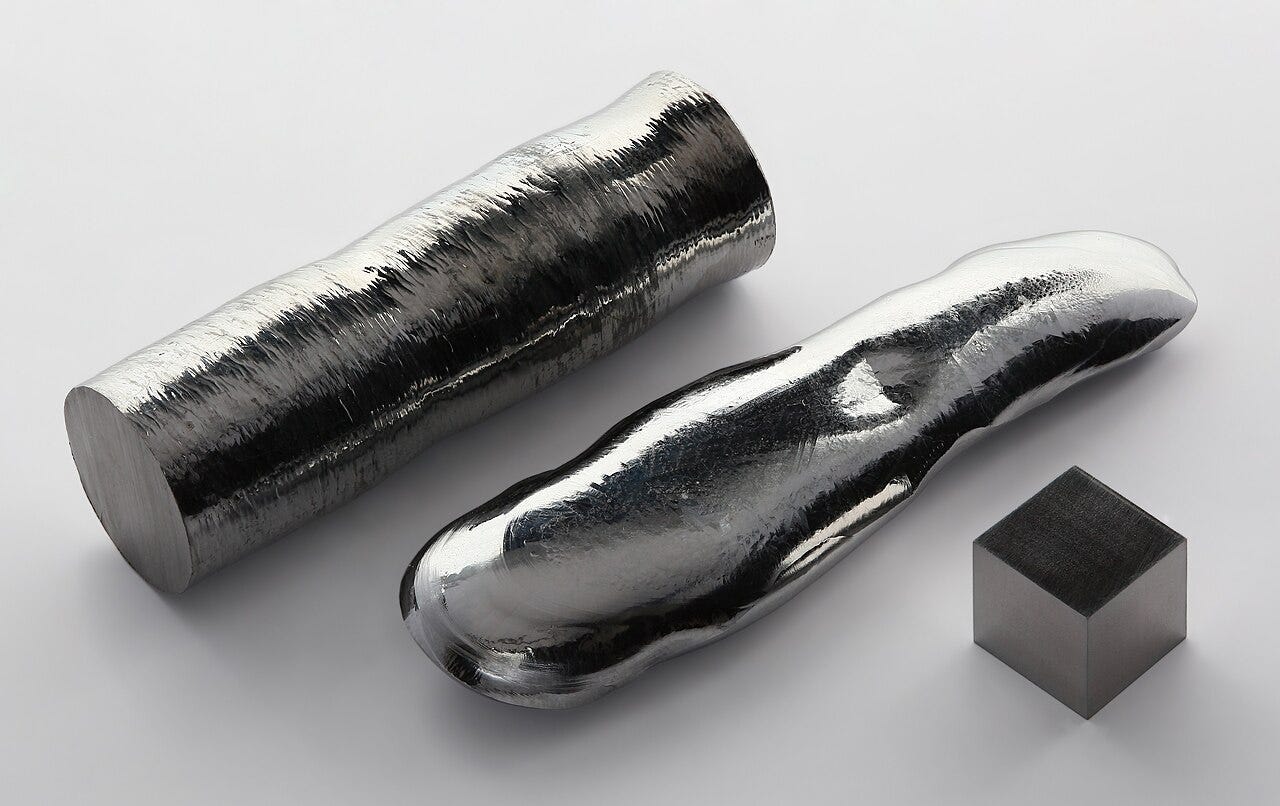
And so, we keep coming back to comparisons with turbines and what happened with Rhenium a while ago. Unlike Scandium, Rhenium is genuinely rare with less than 1 parts per billion abundance in the earth’s crust. It was a critical input in superalloy single crystal turbine blades for jet engines with demand growing rapidly. It is also produced as a byproduct of other metals production. Prices spiked about 6x but came back down in response to actions taken by dominant sophisticated customers and were back to reasonable by 2016. Why and how? Jet engine manufacturers like GE worked with upstream suppliers to improve recovery, captured manufacturing waste, recovered end-of-life turbine blades and redesigned the material with lower rhenium content. The economics and market response are key.
Disclaimer: None of this is meant as advice. I would encourage you to do your own research and invest according to your circumstances.
There is a wholesale retreat of bring your own power type AI datacenter names. I'm not confident Scandium is plaguing the stock at the moment. Permitting issues and general push back on AI datacenters for a number of reasons seem to be hitting everything from Bloom to GEV. Oilfield service companies with mobile power offerings for AI are getting particularly smoked.
Excited to see what’s happening